Kitchen Remodeling and the Pipe Behind Your Cabinets
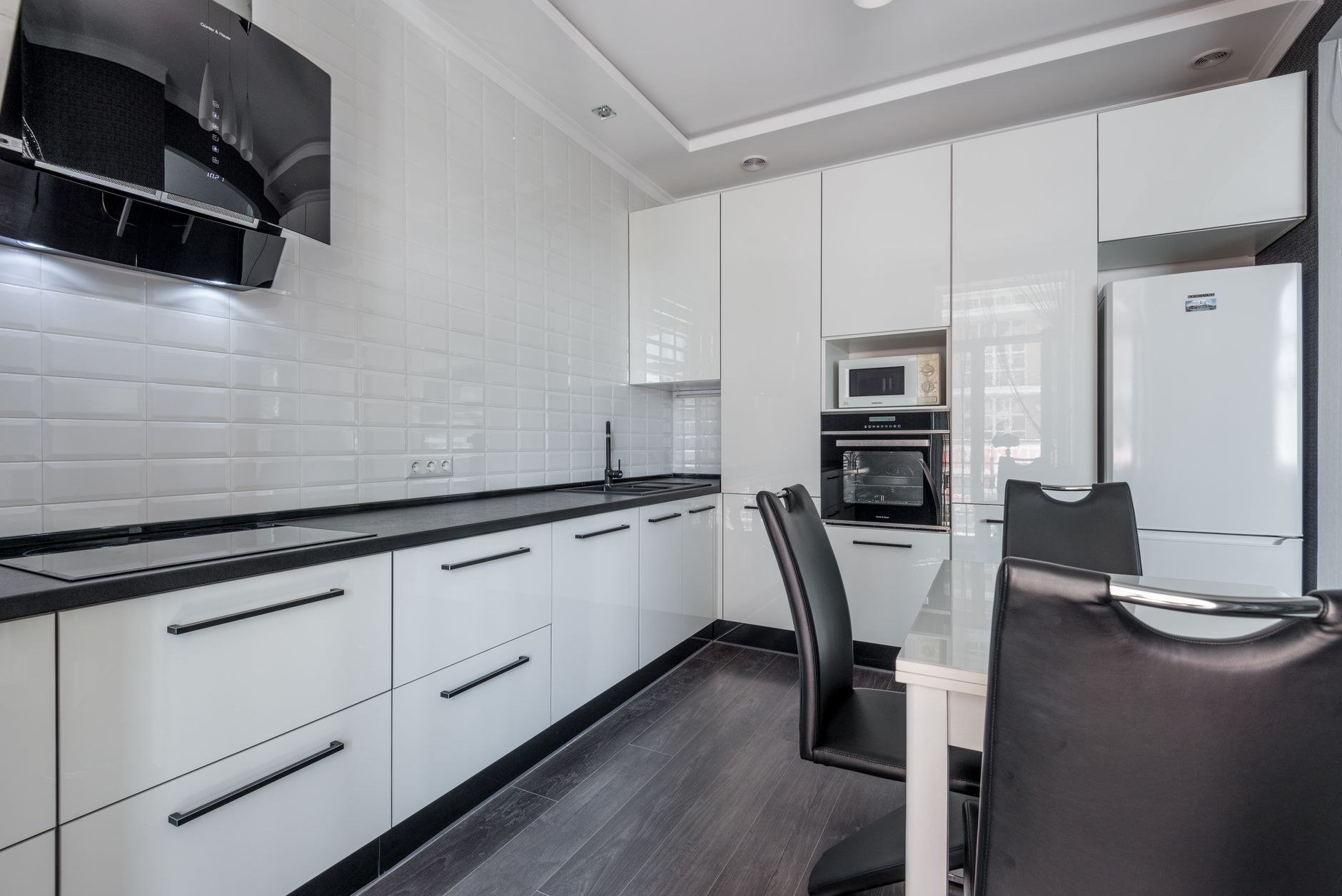
Every kitchen quote has a line for cabinets, a line for stone, a line for tile and a line for labour. Almost none of them has a line for the condition of the pipe inside the wall those cabinets are about to be screwed to, because nobody has looked at it yet.
That pipe is the one item in a kitchen project that is invisible at bidding time, expensive to reach afterwards, and capable of making a brand new room behave like an old one. A beautiful faucet fed by eighty feet of scaled galvanized steel delivers the same tired trickle the old one did.
Older housing stock is where this bites hardest, which is why kitchen remodeling in riverside so often turns into a plumbing conversation the week the drywall comes off rather than the week the plans are drawn. The useful move is to have that conversation first, with the pipe actually identified, so that repiping the wall is a priced decision instead of a mid job surprise with the cabinet delivery already on a truck.
Identify the supply pipe before anything is demolished
You can settle this yourself in about fifteen minutes, and the answer changes the shape of the whole project.
Look in three places: under the kitchen sink, at the water heater, and where the main line enters the house. In a raised foundation home, add the crawl space, which is the honest place to see what the house is plumbed with rather than what somebody patched in later.
Galvanized steel is dull grey, often with a chalky white or rust bloom at the joints. Every connection is a threaded fitting, so you will see hexagonal couplings, elbows and tees screwed together. It rings hard when tapped and a magnet sticks firmly. If the house went up before the mid fifties and nobody has repiped it, this is the usual answer.
Copper is the familiar penny colour when scratched with a coin, though decades of oxidation leave it brown, dark chocolate or green. Joints are soldered, which means a smooth sleeve with a thin silver fillet rather than a nut or a hex. A magnet does not stick.
Brass turns up in houses from the twenties through the forties and confuses people, because the fittings are threaded like galvanized but the metal is yellow under the tarnish. A magnet settles it in a second.
PEX is flexible plastic tubing in white, red or blue, joined with crimp rings or press fittings. CPVC is rigid cream coloured plastic with glued joints. Either one means a repipe has already happened, and the follow up question is how far it went.
The mixed case is the common one. A house gets a new line to the water heater, or a bathroom is redone, and the kitchen branch is left as it was. Finding copper under the sink proves nothing about the forty feet of steel feeding it from the other end of the house.
What sixty years does to galvanized steel
Galvanized pipe is ordinary steel with a zinc coating, and the coating is the only thing protecting it. It is sacrificial, it wears from the inside out, and once it is gone the water is in contact with bare steel.
What follows is scale. Rust and mineral deposit build inward in rough nodules, so the bore narrows while the outside of the pipe still looks perfectly sound. A cut section of half inch pipe from a house of this age often has an opening closer to the diameter of a pencil. Hard water, which is the norm across Riverside and the rest of the inland valley, speeds the deposit up.
That narrowing explains the symptoms people misread as fixture faults.
Pressure that collapses when a second tap opens. Static pressure on an idle gauge can read entirely normal. Flow is what dies, and flow is what you notice when the dishwasher fills while somebody is rinsing vegetables.
The kitchen being the worst room in the house. Kitchens are usually the longest run from the main, and the branch serving them is frequently the smallest diameter. The furthest, thinnest leg of the system is where restriction shows first.
Rust coloured water first thing in the morning, clearing after twenty or thirty seconds. That is scale shedding from pipe that stood still overnight. It is cosmetic, and it is also a direct report on the inside of the wall.
Pinhole leaks at the threads. Cutting a thread removes metal and removes zinc, so a thread is the thinnest part of any galvanized pipe. Failures start there, which is why a house can run quietly for decades and then produce three leaks in one year.
A corroded junction where steel meets copper. Dissimilar metals in contact with water corrode at the joint unless a dielectric union separates them. Plenty of partial repipes done in a hurry skipped it, and that joint is now the weakest point in an otherwise improved system.
Any one of these is worth investigating. Two or more on a house with original steel is effectively a diagnosis, and no fixture upgrade addresses it.
The drain is a separate question with a separate answer
Supply and waste are different materials of different ages. Replacing one does nothing for the other.
Under the sink of an older house you will typically find one of three things. Cast iron is heavy and black, joined with a hub and a lead or rubber gasket, magnetic, and dull to the tap. It is genuinely durable, with the caveat that its interior roughens over time and the horizontal kitchen branch is where grease finds that roughness. Galvanized drain pipe, threaded like the supply, is a worse proposition: it scales aggressively and is the most common reason an old kitchen sink drains slowly no matter how often it is snaked. ABS, the black plastic in general use for decades, means the drain has already been replaced.
The honest way to settle a slow drain is a camera, run before demolition rather than after new cabinets are in. It separates grease that will clear from a bore that has closed, and it finds a belly or a root intrusion that no amount of cabinetry fixes.
While the wall is open the vent deserves a look too. An older kitchen may be vented in steel pipe of the same vintage, and a scaled vent is a drain that gurgles and a trap that pulls.
Why a remodel is the cheapest moment to repipe one wall
The material cost of pipe is small. Nearly everything you pay for in a repipe is access: opening finished walls, protecting rooms, then patching, texturing and repainting.
During a kitchen remodel that cost is already spent. The cabinets are out, the backsplash is gone, the drywall behind the sink run is open for the new layout, and a plumber is on site anyway. Replacing the kitchen branch and the vertical feeding it at that moment is close to pure labour, at a fraction of what the same work costs through a finished wall a year later.
The reverse case is worth dwelling on. New cabinets, stone and tile go on top of old pipe, and a pinhole at a thread behind the sink base two winters later means dismantling part of the installation to reach it. Stone does not come off a cabinet run and go back on.
Partial repipe against whole house, in plain terms
A partial repipe replaces what is reachable: the kitchen branch, the riser serving it, and whatever crosses the open wall. That is a sensible scope when the rest of the house has already been done, or when the budget genuinely will not stretch and the goal is simply to avoid burying old steel under new finishes.
Its limit is arithmetic. If the trunk upstream is still scaled steel, kitchen flow improves modestly at best, because the bottleneck moved rather than left. Ask the plumber to say plainly which restriction is being removed and which is being left, and insist on a dielectric union at every new transition between metals.
A whole house repipe replaces supply from the main to every fixture, usually over a few days, with access holes cut high in walls and in closets. It is the only version that reliably addresses pressure, water colour and leak risk together, and it is the one that makes sense when the kitchen is being gutted alongside any other wet room, or when the house is still on original galvanized throughout.
Get both priced. The whole house number quoted while the kitchen is already open is often much closer to the partial number than homeowners expect, because the hardest room is already accessible.
Hot water wait, and the distance nobody measures
The delay before hot water reaches the kitchen tap is not a water heater problem. It is the volume of cold water standing in the pipe between heater and faucet, and all of it has to be pushed out before hot arrives.
Two levers exist. The first is size and route: a shorter run, and a correctly sized branch rather than an oversized one, holds less water and delivers faster. A repipe is the only moment the route is open to change. The second is recirculation, either a dedicated return loop or a pump with a crossover valve at the furthest fixture, and the rough in for either belongs in this phase rather than a later one.
Insulating the hot line while the wall is open costs very little and shortens the wait on every draw after the first. It is the cheapest item on this list and the one most often skipped because nobody asked for it.
The local housing stock this shows up in
The pattern tracks the build decade closely.
Houses in the older neighbourhoods, the Wood Streets among them, were largely built between the twenties and the early fifties on raised foundations. Original galvanized supply and cast iron waste are the default there, and the crawl space is both why the problem is diagnosable and why the fix is affordable: a plumber can see the horizontal runs, work under the floor and replace much of the system without opening many walls at all. Those threaded joints are now seventy years old and well past the service life anybody designed for.
Post war tract housing is a different exercise. Slab on grade means no crawl space, supply frequently came up through concrete, and a repipe is routed overhead through the attic and dropped inside walls instead. That is routine work. It simply prices and sequences differently, and the open kitchen wall matters even more, because it is one of the few legitimate drop points.
Mineral content in the water is the constant across both. Scale that would take decades elsewhere arrives sooner here, and it collects in a water heater and at aerators as readily as it does in pipe.
Getting it into the scope rather than into a change order
Ask for the supply material to be identified by the plumber, in writing, at the three points above, before a contract is signed.
Ask for a camera inspection of the kitchen drain line as a pre demolition item, with the recording handed over to you.
Ask for a repipe to be priced as a named line item in two versions, kitchen branch and whole house, rather than carried as a vague allowance that gets settled under pressure on a Tuesday afternoon.
Ask for an open wall hold point: a scheduled look at what is actually there once demolition is finished, with photographs, before cabinets are set. That is the moment the real condition becomes visible, and it needs to sit in the schedule rather than in somebody's good intentions.
Ask who repairs and repaints the wall if a repipe is added mid job, and whether a pressure test is performed and documented before anything closes up.
None of this is glamorous and none of it appears in a finished photograph. It is the difference between a kitchen that looks new and a kitchen that works like one, and the only cheap time to decide is while the wall is still open.